Home Transport rules
Louisiana mobile home transport rules
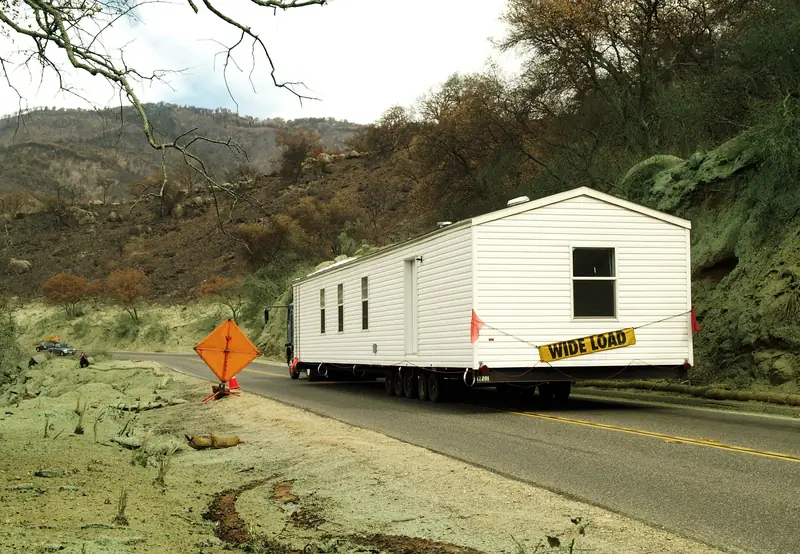
A mobile home wider than 102 inches needs a $10 Louisiana DOTD trip permit, good for one trip of up to 72 hours. Over 12 feet wide it needs a private escort, over 16 feet a State Police escort, and escorted loads move only between sunrise and sunset at no more than 55 mph. This page covers the rules for the trip itself, taken from Louisiana DOTD’s 2026 rule book for oversize loads and from state law. The permits page has the short version. Your mover is the one who has to follow these rules, but knowing them helps you read a quote and plan the day.
The rules at a glance
| Rule | What DOTD says |
|---|---|
| Trip permit | $10 per trip for a mobile home that’s oversize but not overweight. It covers one trip of up to 72 hours, with no extensions. If a holiday blocks travel in those three days, DOTD adds the lost days. |
| Legal width | 102 inches. Anything wider needs a permit. Mobile home eaves of up to 6 inches on each side don’t count toward width. |
| Private escort | Over 12 ft and up to 16 ft wide, or over 90 ft and up to 125 ft long. One escort can cover only one over-width load. |
| State Police escort | Over 16 ft wide or over 125 ft long. Over 18 ft wide needs State Police front and rear. |
| Travel hours | Sunrise to sunset. No night travel for an escorted load without Truck Permit Office and State Police approval. |
| Escorted speed | Set on the permit, never over 55 mph. |
| Weather | No travel in heavy rain, heavy fog or other low-visibility conditions. A mobile home in wind is DOTD’s own example of a load that may not be safe to move. |
| Insurance | A $100,000 auto liability certificate before any permit is issued. Private escorts need $500,000 each in general liability, motor vehicle and workers’ compensation cover. |
| Registration | A valid Louisiana registration certificate. A home only traveling to or through Louisiana can use its home-state registration. |
All from Louisiana DOTD, Regulations for Trucks, Vehicles and Loads (2026).
Before the trip
The mover applies to the DOTD Truck Permit Office. DOTD wants a certificate of insurance first: $100,000 or more in auto liability for trucks and trailers. The permit belongs to the company that got it and can’t be transferred, and the validated permit has to ride in the truck for the whole move (Louisiana DOTD, Regulations for Trucks, Vehicles and Loads (2026)).
The home needs its paperwork too. DOTD’s rules say a mobile home being moved needs a valid Louisiana registration certificate, and one that is only traveling to or through Louisiana can use its home-state registration. A home a manufacturer is delivering to a dealer doesn’t need a license plate, but it has to show “IN-TRANSIT” signs (Louisiana DOTD, Regulations for Trucks, Vehicles and Loads (2026)).
How wide the load is
Width decides most of what the move needs. Louisiana’s legal width is 102 inches, and a mobile home’s eaves can stick out up to 6 inches on each side without counting toward it (Louisiana DOTD, Regulations for Trucks, Vehicles and Loads (2026)). That’s 8.5 feet, so even a 12-foot-wide single-wide travels on a permit.
Escorts
| Load size | Escort DOTD requires |
|---|---|
| Over 12 ft and up to 16 ft wide | Private escort with a Louisiana escort vehicle permit |
| Over 90 ft and up to 125 ft long | Private escort |
| Over 16 ft wide or over 125 ft long | State Police escort, arranged through the nearest troop |
| Over 18 ft wide | State Police escorts front and rear |
A private escort can lead or follow two over-length loads but only one over-width load, so the two halves of a wide double-wide usually mean two escorts. Every private escort vehicle needs DOTD’s escort vehicle permit, which costs $10 a year, and $500,000 each in general liability, motor vehicle and workers’ compensation cover. Going through a city can also mean city or parish police escorts and local permits, and the hauler has to check with those offices (Louisiana DOTD, Regulations for Trucks, Vehicles and Loads (2026)).
Escorts drive in front of a wide load on two-lane roads and behind it on multi-lane highways. Escorts and loads both pull through DOTD’s weigh stations. Before a bridge, hill or incline where drivers can’t see what’s coming, the load stops and the escort goes ahead to hold traffic (Louisiana DOTD, Regulations for Trucks, Vehicles and Loads (2026)).
Height
Loads over 15 ft 10 in high need a pole truck in front to check clearances on state highways, and loads over 18 ft need a bucket truck (Louisiana DOTD, Regulations for Trucks, Vehicles and Loads (2026)). A mobile home on a toter rarely gets near that, but it matters for homes with a tall roof pitch.
When the home can move
- Daylight only. Permitted loads are generally barred at night, in bad weather and on certain holidays. Normal hours are sunrise to sunset.
- Weekday rush hours. Loads over 12 ft wide can’t use set stretches of interstate in Shreveport, Monroe, Lake Charles, Baton Rouge and New Orleans from 7 to 9 a.m. and 3:30 to 5:30 p.m., Monday through Friday. In Lake Charles that’s all of I-210 plus I-10 from LA 397 to LA 108. In Baton Rouge it’s all of I-110, I-10 from Bluebonnet to the Mississippi River, and I-12 from O’Neal Lane to I-10. Lafayette isn’t on the list.
- Weather. Heavy rain, heavy fog or any low-visibility condition stops a move. Wind and light rain usually don’t, unless they make the load a hazard. DOTD’s own example is a mobile home in wind. If bad weather starts during the trip, the load has to get off the road and wait.
Louisiana DOTD, Regulations for Trucks, Vehicles and Loads (2026).
LocalMovers.com notes that the transport itself usually takes a day, and that wind can delay a move (LocalMovers.com, the mobile home moving process). The hurricane and flood season page shows which months Lafayette’s records say are the riskiest.
On the road
Every load over 10 ft wide shows two yellow “OVERSIZE LOAD” signs, on the front of the truck and the back of the load. DOTD sets the size: at least 7 ft long and 18 in high, with black letters at least 10 in tall. Over-width loads also carry red or fluorescent orange flags, at least 18 inches square, at the widest front and rear corners, and at night or in bad weather they need amber lights at the front corners and red lights at the back (Louisiana DOTD, Regulations for Trucks, Vehicles and Loads (2026)).
An escorted load travels only on the roads named on the permit, at the speed the permit sets, and never over 55 mph. It keeps right so traffic can pass. When traffic backs up behind it, the escort driver has to move the load to the shoulder and let cars by (Louisiana DOTD, Regulations for Trucks, Vehicles and Loads (2026)).
Who’s allowed to do what
Louisiana law defines a transporter as someone who hauls a manufactured or modular home to the site but doesn’t block or anchor it, apart from putting blocks under the hitch (La. R.S. 51:912.21, definitions). Setup, meaning blocking, leveling, tie-downs and joining sections, is an installer’s job. Installers and transporters each need a license, and a licensed installer can also transport without a second license (La. R.S. 51:912.27, licensing of installers and transporters).
Within 10 days of delivery, the installer, or a homeowner who sets up their own home, puts the state installation permit sticker on the side of the home where the power connects. The sticker costs $20 (Louisiana manufactured home installation and transportation law (R.S. 51:912.21 and following)). These installation rules cover manufactured and modular homes. State law says they don’t apply to setting up a “mobile home”, which it defines as one built before the 1974 federal standards (Louisiana manufactured home installation and transportation law (R.S. 51:912.21 and following)).
Where the home can go in Lafayette Parish
Placement is a local rule. Lafayette Consolidated Government wants a mobile home permit application approved before the home is placed (Lafayette Consolidated Government, building permits). In unincorporated Lafayette Parish, the Lafayette Development Code lets up to 4 manufactured homes go on a property without meeting the code’s rules for community streets and recreation, as long as each home is at least 30 feet from the nearest structure or other home and each space has at least 12,000 square feet. Carports, patios and storage sheds don’t count as structures for that spacing (Lafayette Development Code, May 2026 (§ 89-86)).
A new manufactured home community has to be at least 10 acres, with no more than 5.5 spaces per acre, one home per space, 30 feet between homes and a 20-foot front setback from the street (Lafayette Development Code, May 2026 (§ 89-86)). Other parishes and towns set their own rules.
Quick answers
Can a mobile home be moved at night in Louisiana?
Usually not. DOTD says permitted loads are generally barred from travel at night, and normal hours run from sunrise to sunset as set by the National Weather Service. An escorted load can’t move in the dark without approval from both the Truck Permit Office and State Police (Louisiana DOTD, Regulations for Trucks, Vehicles and Loads (2026)).
How fast can you tow a mobile home in Louisiana?
For an escorted load, the Truck Permit Office sets the speed limit on the permit, and it can never be over 55 mph. If the permit sets a lower limit, that’s the limit (Louisiana DOTD, Regulations for Trucks, Vehicles and Loads (2026)).
Does a single-wide need an escort in Louisiana?
It depends on the width. DOTD requires a private escort for loads over 12 feet wide and up to 16 feet, and up to six inches of eaves on each side don’t count. A single-wide 12 feet wide or less, measured that way, isn’t over the escort line for width. Length counts too: loads over 90 feet long also need a private escort (Louisiana DOTD, Regulations for Trucks, Vehicles and Loads (2026)).
Are there rush-hour limits for wide loads around Lafayette?
DOTD’s weekday rush-hour ban for loads over 12 feet wide covers parts of the interstate in Shreveport, Monroe, Lake Charles, Baton Rouge and New Orleans, from 7 to 9 a.m. and 3:30 to 5:30 p.m. Lafayette isn’t on that list, but a move to or past Lake Charles or Baton Rouge on I-10 can run into it (Louisiana DOTD, Regulations for Trucks, Vehicles and Loads (2026)). Local police or parish escorts and permits can also apply in town.
This is a plain summary of DOTD’s rule book and state law, not legal advice. The permit your mover gets from DOTD sets the actual route, times and escorts.
Sources: Louisiana DOTD, Regulations for Trucks, Vehicles and Loads (2026); La. R.S. 51:912.21, definitions; La. R.S. 51:912.27, licensing of installers and transporters; Louisiana manufactured home installation and transportation law (R.S. 51:912.21 and following); Lafayette Consolidated Government, building permits; Lafayette Development Code, May 2026 (§ 89-86); LocalMovers.com, the mobile home moving process.
Get a mobile home moving quote
Only your name and phone are required. A local mover follows up with you.
How this works
- We send it to one mover on your route, or up to 3.
- If they can take the job, they contact you with a price.
- Asking is free.
LocalMovers.com’s Lafayette data (Q1 2026) puts a full-service single-wide move under 50 miles at about $6,500. Source: LocalMovers.com, Lafayette mobile home movers.
Last updated